JAMB, WAEC, and admissions guides for Nigerian students
Best Polytechnics in Nigeria 2026: Ranked
Polytechnics offer a hands-on, career-focused route into higher education, and the gap between the best and the rest is wide. Choosing the right one shapes your career prospects.
This guide ranks the best polytechnics in Nigeria for 2026, explains what goes into a polytechnic ranking, how polytechnic admission works, and tackles the HND versus B.Sc question.
The top polytechnics in Nigeria for 2026 admission, ranked by accreditation strength, course breadth, employer signal, and infrastructure quality, are: Yaba College of Technology (YABATECH), Federal Polytechnic Ilaro, Federal Polytechnic Nekede, Kaduna Polytechnic, Auchi Polytechnic, Federal Polytechnic Oko, Federal Polytechnic Ado-Ekiti, The Polytechnic Ibadan, Institute of Management and Technology (IMT) Enugu, and Federal Polytechnic Bida. These ten cover the leading federal polytechnics and the most reputable state polytechnics, with strong engineering, business, computing, and applied science programmes.
Polytechnic education in Nigeria runs in two stages: National Diploma (ND, 2 years) and Higher National Diploma (HND, 2 years after ND). The qualifications are accredited by the National Board for Technical Education (NBTE). JAMB sets the polytechnic national cut-off at 100 (much lower than the university cut-off of 140), but individual polytechnics set their own cut-offs higher; YABATECH and the top federal polytechnics typically admit at 180 to 220 JAMB for competitive courses. This guide ranks the top 10 polytechnics and covers what each is known for.
The top 10 polytechnics in Nigeria for 2026
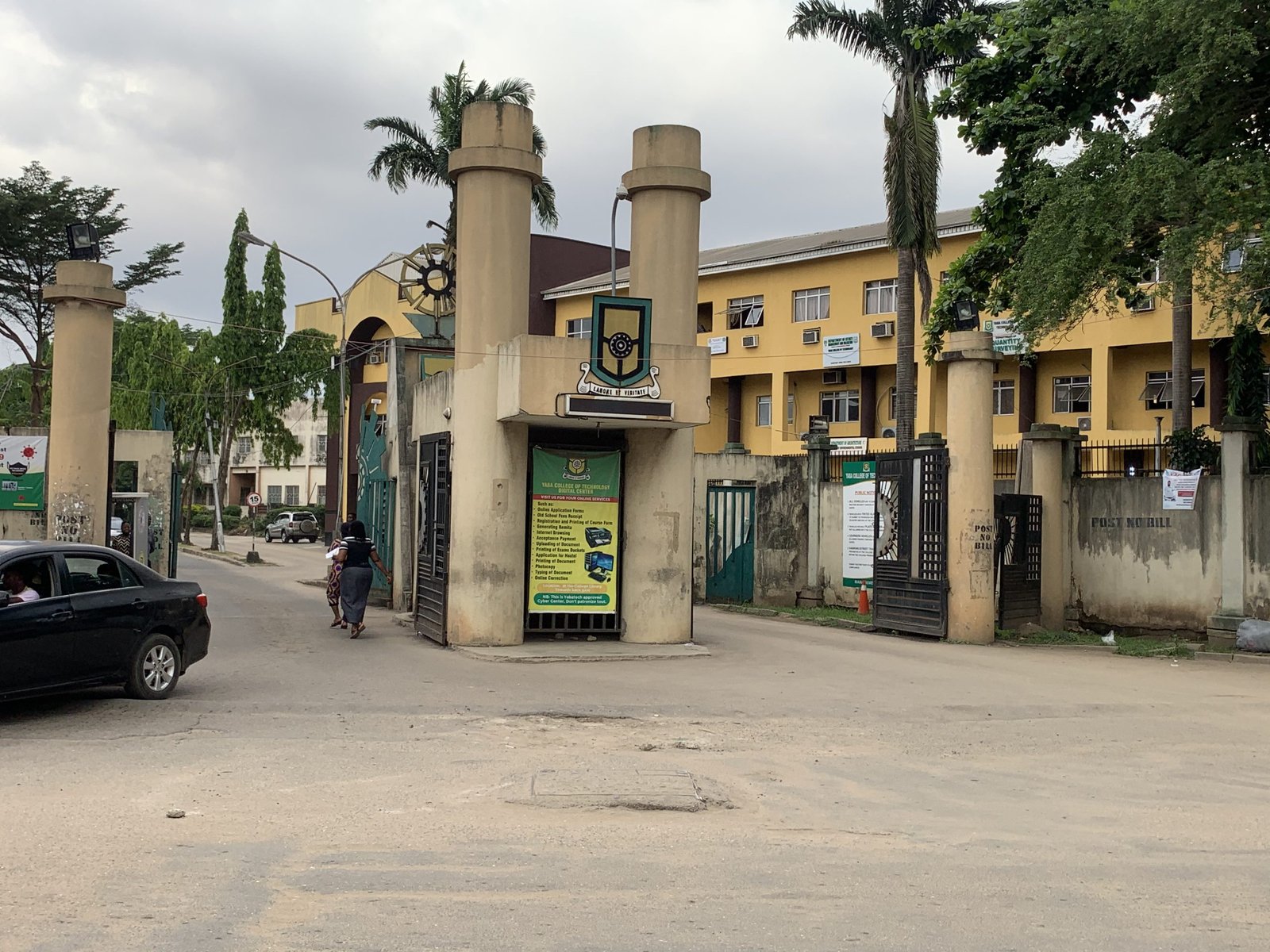
1. Yaba College of Technology (YABATECH), Lagos
Established 1947, the oldest and most prestigious polytechnic in Nigeria. YABATECH sits in Yaba, Lagos, on a campus shared geographically with UNILAG. The polytechnic runs strong programmes in Computer Science, Computer Engineering, Mechanical Engineering, Architecture, Quantity Surveying, Building, Mass Communication, Accountancy, and Business Administration. Working JAMB cut-offs sit at 180 to 220 for competitive courses. YABATECH graduates dominate the polytechnic-tier recruitment at Lagos firms; the school is known for producing job-ready technical graduates.
2. Federal Polytechnic Ilaro, Ogun State
Strong federal polytechnic in Ilaro, Ogun State, about 70 km from Lagos. Specialises in Engineering, Computer Science, Accountancy, Business Administration, and Mass Communication. Working JAMB cut-offs at 160 to 200 for popular programmes. Ilaro’s reputation is solid and improving; many graduates work in Lagos and Abeokuta corporate roles.
3. Federal Polytechnic Nekede, Owerri, Imo State
Federal polytechnic in Owerri serving the South-East region. Strong Engineering programmes (Civil, Mechanical, Electrical, Computer), plus Architecture and Business courses. JAMB cut-offs at 150 to 190. Nekede is the leading South-East polytechnic for technology programmes.
4. Kaduna Polytechnic, Kaduna State
The largest federal polytechnic in Nigeria by enrolment. Located in Kaduna, with strong Engineering (Civil, Mechanical, Electrical, Mining), Business and Surveying programmes. JAMB cut-offs at 140 to 180 for most programmes. Kaduna Polytechnic feeds the northern industrial and government sectors with technically-trained graduates.
5. Auchi Polytechnic, Edo State
Federal polytechnic in Auchi, Edo State. Strong Engineering, Architecture, Estate Management, and Computer Science programmes. JAMB cut-offs at 150 to 180. Auchi is the leading polytechnic in the South-South for technical and built-environment programmes.
6. Federal Polytechnic Oko, Anambra State
Federal polytechnic in Oko, Anambra State. Engineering, Business, Computer Science, Architecture, Mass Communication. JAMB cut-offs at 150 to 180. Strong programmes in the applied technology and business areas.
7. Federal Polytechnic Ado-Ekiti, Ekiti State
Federal polytechnic in Ado-Ekiti, serving Ekiti and the surrounding South-West region. Wide course offering across Engineering, Business, Computing, Architecture, and Mass Communication. JAMB cut-offs at 140 to 180.
8. The Polytechnic Ibadan, Oyo State
State-owned polytechnic in Ibadan with long history and strong reputation, especially for Business Administration, Mass Communication, Architecture, and Computer Science. JAMB cut-offs at 150 to 190 for popular programmes. Owned by the Oyo State Government with indigene tuition advantages.
9. Institute of Management and Technology (IMT) Enugu
State-owned institute in Enugu with polytechnic-level programmes. Strong Business, Computing, Engineering, and Communication programmes. JAMB cut-offs at 140 to 180. IMT graduates are well represented in Enugu and South-East corporate roles.
10. Federal Polytechnic Bida, Niger State
Federal polytechnic in Bida, Niger State. Specialises in Engineering, Computer Science, Business, and Surveying. JAMB cut-offs at 140 to 170. Serves the North-Central region with strong technical training.
What makes a polytechnic ranking
Polytechnic rankings are less standardised in Nigeria than university rankings. The criteria below shape the rankings above and most other Nigerian polytechnic ranking attempts.
Accreditation status with NBTE. All accredited polytechnics meet a minimum standard; the strongest meet additional standards in specific programme accreditation.
Course breadth and accreditation. Top polytechnics run 20+ accredited programmes across Engineering, Business, Computing, Health Sciences, Sciences, Arts, Built Environment.
Employer recognition. Top polytechnics produce graduates who are recruited by Lagos and Abuja corporate firms, government agencies, oil and gas companies. Reputation builds through alumni networks and industry partnerships.
Infrastructure quality. Modern labs, well-equipped workshops, computer rooms, libraries with current journals. Top federal polytechnics receive government infrastructure funding; state and private polytechnics depend on their owners.
JAMB cut-off levels. Higher cut-offs signal stronger applicant pools and more selective admissions; an indirect quality measure.
Graduate destination data. Where graduates work, what they earn, how they progress. This data is less systematically published in Nigeria than abroad, but anecdotal patterns favour the top federal polytechnics.
Polytechnic admission process
Polytechnic admission uses JAMB UTME (same exam as universities) but with lower national cut-off (100). Candidates pick polytechnics as their first or second choice on JAMB. After JAMB results, each polytechnic runs its own Post-UTME screening, similar to the university process. Admission is based on the JAMB + Post-UTME aggregate.
Direct Entry to ND from JAMB DE is rare; ND is the entry-level qualification. Direct Entry to HND from ND is the standard progression: after completing ND with at least Merit (lower credit), students do a year of mandatory industrial training (SIWES at NBTE-approved firms), then return for two more years to complete HND. The full ND+HND timeline is 5 years (2 ND + 1 SIWES + 2 HND).
Some polytechnics also offer direct-entry HND for candidates with relevant ND from other accredited polytechnics, plus the required SIWES year. The HND admission is competitive at top polytechnics; many ND graduates apply for HND at YABATECH or Federal Polytechnic Ilaro because of the stronger reputation.
HND vs B.Sc: the conversion question
HND is the polytechnic’s top qualification; B.Sc is the university’s. Historically there was a perceived gap (HND seen as lower-tier), but the gap has narrowed substantially over the past decade. Many corporate roles now accept HND at parity with B.Sc for technical and operational positions. Senior management and specialist roles still sometimes prefer B.Sc.
HND-to-B.Sc conversion is real and available. Universities run “HND Top-Up” or Direct Entry routes that admit HND graduates into the third year of a relevant B.Sc programme. The route adds 2 years to the overall career path but ends with both qualifications. For HND holders who want the B.Sc title (sometimes required for postgraduate study or specific career routes), this is the standard path.
Conclusion
The right polytechnic gives you practical skills and a qualification employers respect, so the choice deserves real thought.
Use the ranking to find a strong, accredited polytechnic that fits your course and budget, and plan early for the conversion question if a degree is your long-term goal.
Frequently asked questions
Which polytechnic is the best in Nigeria for 2026?
YABATECH is widely regarded as the strongest polytechnic in Nigeria for 2026, drawing on accreditation breadth, employer recognition, Lagos location, and infrastructure quality. Federal Polytechnic Ilaro and Federal Polytechnic Nekede are strong runners-up. The rankings shift slightly year to year, but YABATECH has held the top spot for the past several cycles based on graduate placement and admission selectivity.
Is a polytechnic ND equivalent to a B.Sc?
No. ND is a two-year diploma; B.Sc is a four-year bachelor’s degree. ND is followed by HND (two more years after a one-year SIWES) for the full polytechnic qualification. HND is sometimes treated as equivalent to a B.Sc in employer recruitment, especially for technical and operational roles, but the qualifications are technically different. For postgraduate study and senior management roles, the B.Sc typically has the edge.
What is the cut-off mark for polytechnic in Nigeria?
JAMB sets the national polytechnic cut-off at 100, below which no polytechnic can admit. Individual polytechnics set their own institutional cut-offs higher: YABATECH sits at 150-200 for popular programmes; Federal Polytechnic Ilaro at 140-180; Kaduna Polytechnic at 130-170; newer or less competitive polytechnics at the 100-130 band. Course-specific cut-offs at top polytechnics can reach 200+ for very popular programmes like Computer Science at YABATECH.
Can I go to a university directly from polytechnic?
Yes, through Direct Entry. An HND graduate with at least Upper Credit can apply for Direct Entry into a university B.Sc at 200 or 300 level (depending on the school). The DE candidate registers with JAMB on the Direct Entry form (₦5,700), takes the university’s DE screening, and enters at 200 level. Total path: 2 ND + 1 SIWES + 2 HND + 2 to 3 years B.Sc = 7 to 8 years for the full HND-plus-B.Sc combination, but you end with both qualifications.
Which polytechnics are best for Engineering?
YABATECH for Computer Engineering and Mechanical Engineering. Federal Polytechnic Nekede for Civil and Electrical Engineering. Kaduna Polytechnic for Mining and Mechanical Engineering. Auchi Polytechnic for Engineering broadly. Federal Polytechnic Ilaro for Computer Engineering. These five cover most of the top Engineering polytechnic options. The Federal Universities of Technology (FUTA, FUTMINNA, FUTO) run university-tier Engineering programmes; for the B.Eng route, those are alternatives to polytechnic Engineering.
How much does polytechnic education cost in Nigeria?
Federal polytechnics charge low tuition (₦20,000 to ₦60,000 per session). State polytechnics charge varying tuition with indigene/non-indigene differentials (₦30,000 to ₦100,000 for indigenes; ₦80,000 to ₦200,000 for non-indigenes). Private polytechnics charge ₦200,000 to ₦600,000 per session. Total ND + HND cost: ₦200,000 to ₦500,000 at federal polytechnics, higher at state and private. The cost is substantially lower than university education, making polytechnic education a real value option.
Related guides
JAMB Polytechnic Cut-Off Marks 2026: Full Guide JAMB 2026 polytechnic cut-off marks across the major institutions. National cut-off 100. Working cut-offs at YABATECH, Ilaro, Nekede and more.
Lagos-based education writer covering JAMB, WAEC and NECO, and tertiary admissions across Nigeria. Chinedu tracks cut-off marks, admission lists, and school portal updates so students and parents do not have to.