JAMB, WAEC, and admissions guides for Nigerian students
ABU Cut-Off Marks 2026: Full Course List
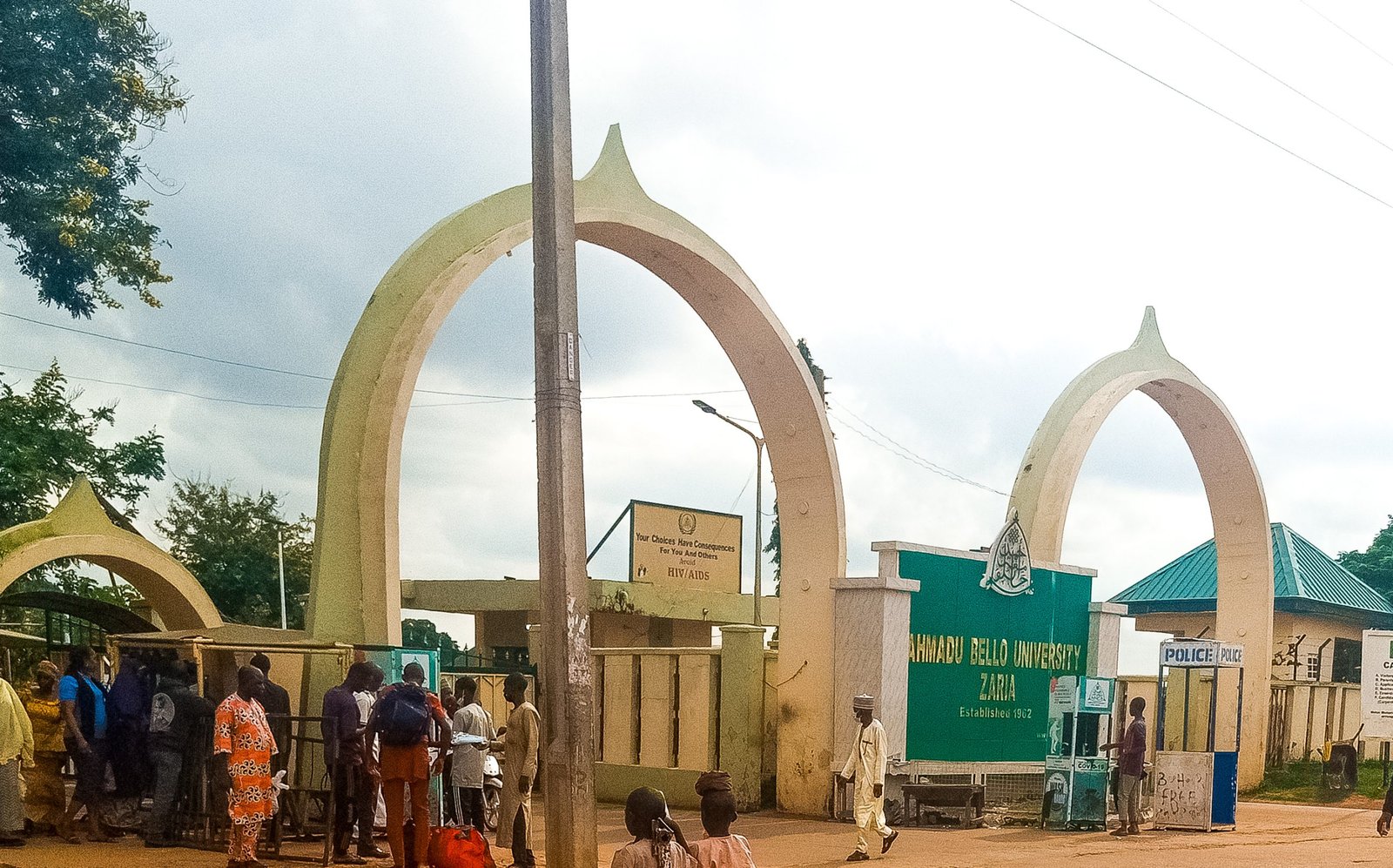
Ahmadu Bello University is the largest university in Nigeria, and its cut-off marks span a wide range across its many faculties. The catchment factor also shapes who gets in at what score.
This guide breaks down the ABU cut-off marks for 2026 by faculty, how they have moved year on year, how ABU calculates the admission aggregate, and what the northern catchment advantage means for applicants.
Ahmadu Bello University (ABU) Zaria 2026 cut-off marks place Medicine and Surgery at 270, Pharmacy at 250, Dentistry at 260, Law at 240 to 250, Engineering at 220 to 240, and most arts and education courses at 180 to 200 JAMB. These are the working cut-offs used by ABU’s admission committee for the 2026 cycle. ABU’s institutional cut-off has sometimes sat at 180 (lower than UI or UNILAG), reflecting the school’s larger intake and broader applicant base.
ABU is Nigeria’s largest federal university by enrolment, admitting around 10,000 to 12,000 fresh students each year across multiple campuses. The cut-offs below reflect the band needed for real admission contention. The actual decision uses a blended JAMB and Post-UTME aggregate, with O Level used as a tie-breaker. ABU runs the College of Medicine at Shika near ABU Teaching Hospital, with most other faculties at Samaru. Confirm cut-offs on admission.abu.edu.ng each cycle.
The tables below cover ABU’s main faculties with working JAMB cut-offs for the 2026 cycle.
At a glance
Detail
2026 value
Overall JAMB minimum (institutional)
180 to 200
Medicine, Dentistry minimum
250 (working floor 270)
Pharmacy minimum
250
Law minimum
250 (working floor 240-250)
Engineering minimum
200 (working floor 220-240)
Aggregate formula
JAMB and Post-UTME blended
Post-UTME fee
~₦2,000 to ₦2,500
Quota split
45% merit, 35% catchment, 20% ELDS
Catchment states
Northern states (Kaduna and surrounding)
ABU 2026 cut-off marks by faculty
ABU has the broadest faculty coverage of any Nigerian university; the working cut-offs below reflect the most-applied programmes.
College of Medicine (Shika)
Course
JAMB cut-off (2026)
Medicine and Surgery
270
Dentistry
260
Pharmacy
250
Nursing
240
Medical Laboratory Science
230
Radiography
220
Anatomy, Physiology
215
Engineering
Course
JAMB cut-off (2026)
Electrical Engineering
235
Mechanical Engineering
230
Civil Engineering
225
Chemical Engineering
230
Petroleum Engineering
235
Computer Engineering
240
Agricultural Engineering
210
Water Resources and Environmental Engineering
210
Veterinary Medicine and Agriculture
Course
JAMB cut-off (2026)
Veterinary Medicine
230
Animal Science
200
Crop Science, Soil Science
195
Agricultural Economics
200
Forestry, Wildlife, Fisheries
195
Food Science and Technology
205
Sciences
Course
JAMB cut-off (2026)
Computer Science
230
Microbiology
215
Biochemistry
215
Industrial Chemistry
205
Mathematics, Statistics
190
Physics, Industrial Physics
190
Botany, Zoology
190
Geology, Geography
195
Law, Arts and Education
Course
JAMB cut-off (2026)
Law
250
Mass Communication
225
English Language
200
History
190
Arabic Studies, Islamic Studies
190
Christian Religious Studies
190
Hausa, Linguistics, Foreign Languages
185
Education (all subjects)
180
Social and Management Sciences
Course
JAMB cut-off (2026)
Accounting
220
Business Administration, Banking and Finance
210
Economics
210
Marketing
205
Public Administration, Local Government Studies
200
Political Science, International Relations
205
Sociology, Psychology, Social Work
200
Environmental Design
Course
JAMB cut-off (2026)
Architecture
225
Quantity Surveying, Estate Management
205
Building, Urban and Regional Planning
200
How ABU cut-offs have moved year on year
ABU’s institutional cut-off has historically sat in the 180 to 200 range, which is lower than UI, UNILAG, and OAU. This reflects ABU’s larger intake and the broader northern catchment that draws candidates with a wider range of scores. Course-level working cut-offs, however, are competitive at the headline programmes.
Medicine has been at 270 working for the last two cycles, up from 260 in 2022. Pharmacy moved from 240 to 250. Law has held at 240-250 working since 2022. Engineering branches have moved from a 200-220 band to 210-240, with Computer Engineering and Electrical Engineering at the top.
The Mass Communication, Accounting, and Economics programmes have nudged upward over the past four cycles as ABU’s reputation in these social sciences and management fields has solidified. Computer Science has moved from 215 to 230 with the broader tech surge.
ABU’s lower institutional floor compared to UNILAG and UI means a candidate with 200 JAMB has more course options at ABU than at the Lagos-Ibadan schools. This is one of ABU’s structural advantages for candidates with mid-range JAMB scores.
How ABU calculates the admission aggregate
ABU uses a blended JAMB and Post-UTME aggregate. Recent cycles have used roughly 50/50, with JAMB scaled to 50 (divide by 8) and Post-UTME scaled to 50 (halve the percentage). The school confirms the exact blend each cycle on the admission portal.
Worked example: a candidate scores 270 JAMB (33.75 scaled) and 65% Post-UTME (32.5 scaled). Aggregate: 66.25. A second candidate scores 240 JAMB (30 scaled) and 78% Post-UTME (39 scaled). Aggregate: 69. The second candidate ranks higher.
O Level grades are used at the verification stage and as a tie-breaker. The 45-35-20 quota split is applied on top. ABU’s catchment is the northern states broadly, with Kaduna State specifically privileged. The merit quota (45%) is open nationally.
For Medicine, the working aggregate is around 72 to 75 out of 100. For Law, around 68 to 72. For Engineering branches, around 65 to 70 depending on department. Plan accordingly.
What happens if you score below the cut-off
ABU offers more options than UI or UNILAG for candidates with mid-range scores because of the broader course offering and the lower institutional floor. A Medicine aspirant with 240 to 250 can pivot to Anatomy, Physiology, Nursing or Medical Laboratory Science at ABU directly through Change of Course. Engineering aspirants with 200-220 can target Agricultural or Water Resources Engineering where cut-offs are softer.
For candidates below 200 JAMB, ABU’s Education, Arts, and Agricultural programmes are accessible. The Faculty of Education admits at 180 institutional for most subjects.
The ABU supplementary list is also active, adding candidates who narrowly missed the merit cut-off but have strong Post-UTME aggregates. Supplementary admissions typically come in October or November.
The ND-to-Direct-Entry route is well established at ABU, especially for Engineering branches. Kaduna Polytechnic, Federal Polytechnic Kaduna, and other northern polytechnics feed ABU’s DE intake at 200 level. This is a legitimate route for candidates who could not get UTME admission directly.
The northern catchment advantage and what it means
ABU’s catchment includes the broader northern states, with Kaduna at the centre. Candidates from Kaduna, Kano, Katsina, Zamfara, Jigawa, Sokoto, Kebbi, Niger, Plateau, Bauchi, Gombe, Borno, Yobe, Adamawa and Taraba compete for the 35% catchment quota slots. The catchment threshold is typically 10 to 20 marks lower than the merit threshold for the same course.
For a northern candidate with 240 JAMB, ABU Medicine is a more realistic target than UI Medicine even though the published cut-offs are similar. The catchment quota effectively gives the northern candidate a parallel pool to compete in, with fewer competitors at the high end. For a candidate from Lagos applying for ABU Medicine, the merit quota (45%) is the relevant pool, and the threshold is 270 working.
Non-northern candidates can still get into ABU through the merit quota, but the bar is the same nationally. Many ABU students come from the South-East and South-West through the merit route. Cultural adaptation to Zaria is part of the choice; the city is predominantly Hausa-Fulani Muslim but the campus itself is multi-ethnic.
The ELDS quota (20%) overlaps significantly with the northern catchment, since many ELDS-designated states are in the north. This further skews ABU’s overall intake northward but does not lock out applicants from any region.
Conclusion
An ABU cut-off is the minimum to be considered, but catchment and aggregate together decide the outcome.
Use these figures to pick a course that suits your score and location, then aim above the cut-off to strengthen your case.
Frequently asked questions
Is ABU easier to get into than UI or UNILAG?
For the headline programmes (Medicine, Pharmacy, Law), ABU is broadly similar in difficulty with working cut-offs 10 marks below UI and UNILAG. For the broader course offering, ABU’s lower institutional floor (180) gives candidates more options than UNILAG (200) or UI (200). A 200 JAMB candidate has more open doors at ABU than at the Lagos-Ibadan federal universities. The catchment quota also helps northern candidates relative to the merit pool at UI or UNILAG.
Are ABU’s catchment rules strict?
ABU applies the JAMB-mandated 45-35-20 split. Kaduna State plus the surrounding northern states (Kano, Katsina, Zamfara, Jigawa, Sokoto, Kebbi, Niger, Plateau, Bauchi, Gombe, Borno, Yobe, Adamawa, Taraba) make up the broader catchment. Candidates from these states have an edge on the catchment quota. The ELDS quota (20%) prioritises educationally-less-developed states, many of which are in the north, so ABU’s overall intake skews northward.
Has ABU officially released its 2026 cut-offs?
ABU releases department-by-department cut-offs on its admission portal after the JAMB Policy Meeting, usually in June or July. The figures here reflect the working bands from the 2026 admission cycle drawn from the admission committee’s preliminary parameters. Confirm on admission.abu.edu.ng before paying Post-UTME.
If I scored 250 in ABU Medicine, am I close?
250 meets the published cut-off but sits 20 marks below the working floor of 270 for Medicine. You can sit Post-UTME but would need exceptional Post-UTME (above 90%) plus catchment positioning to be in real contention. A realistic outcome at 250 is a Change of Course to Anatomy, Physiology, Medical Laboratory Science, Nursing, or Pharmacy. ABU has strong programmes in all of these life sciences.
Which campus do I study at?
Most undergraduate programmes (Engineering, Science, Agriculture, Arts, Social Sciences, Education) are at the Samaru campus. Law, Education and Administration are at the Kongo campus. Medicine and Surgery candidates spend pre-clinical years at Samaru then move to Shika (the College of Medicine) for clinical years. Your campus appears on your admission letter.
How competitive is ABU Pharmacy?
ABU Pharmacy works at 250 JAMB, slightly below UI (260) and UNILAG (260). The Faculty of Pharmaceutical Sciences at ABU is well established and produces graduates who write the Pharmacists Council of Nigeria (PCN) licensing exam. The lower cut-off vs UI and UNILAG reflects the regional applicant pool rather than any difference in academic standards.
Why ABU’s scale shapes its cut-offs
ABU’s 50,000+ student enrolment is the largest of any Nigerian university. This scale produces two effects on cut-offs. First, the institutional floor sits lower than at smaller schools because ABU has the intake capacity to absorb a wider applicant pool. Second, the headline competitive programmes (Medicine, Pharmacy, Law) still maintain tight cut-offs at the top tier because the school’s reputation in these fields draws strong applicants nationally.
The breadth of ABU’s 18 faculties also means more entry routes for candidates. A 200 JAMB candidate has options in Education, Arts, Agriculture, less competitive Engineering, and the broader Sciences. A 240 JAMB candidate has options in Pharmacy, Law, mid-tier Engineering. The school covers almost every undergraduate field offered in Nigeria.
Before you act on this guide
Cut-off marks change from one admission cycle to the next, and departmental cut-offs are set by each institution rather than by JAMB. Treat the figures above as the most recent published guidance and a guide to the usual range, not as a guarantee for the current cycle. Confirm the live figure on JAMB CAPS and on your institution’s own admissions portal before you make a course choice.
UNIBEN Cut-Off Marks 2026: Full Course List UNIBEN 2026 cut-off marks by course. Medicine 270+, Pharmacy 260+, Law 250+, Engineering 230+. Working figures and admission aggregate formula.
UNILORIN Cut-Off Marks 2026: Full Course List UNILORIN 2026 cut-off marks by course. Medicine 270+, Pharmacy 250+, Law 240+, Engineering 220+. Stable-calendar federal university guide.
UI Cut-Off Marks 2026: Full Course List UI 2026 cut-off marks by course. Medicine 280+, Pharmacy 260+, Law 260+, Engineering 230+. Full course list with aggregate formula…
CO
About the editor
Written by Chinedu Okafor
Lagos-based education writer covering JAMB, WAEC and NECO, and tertiary admissions across Nigeria. Chinedu tracks cut-off marks, admission lists, and school portal updates so students and parents do not have to.