JAMB, WAEC, and admissions guides for Nigerian students
How to Gain Admission into LASU (Lagos State University): 2026 Guide
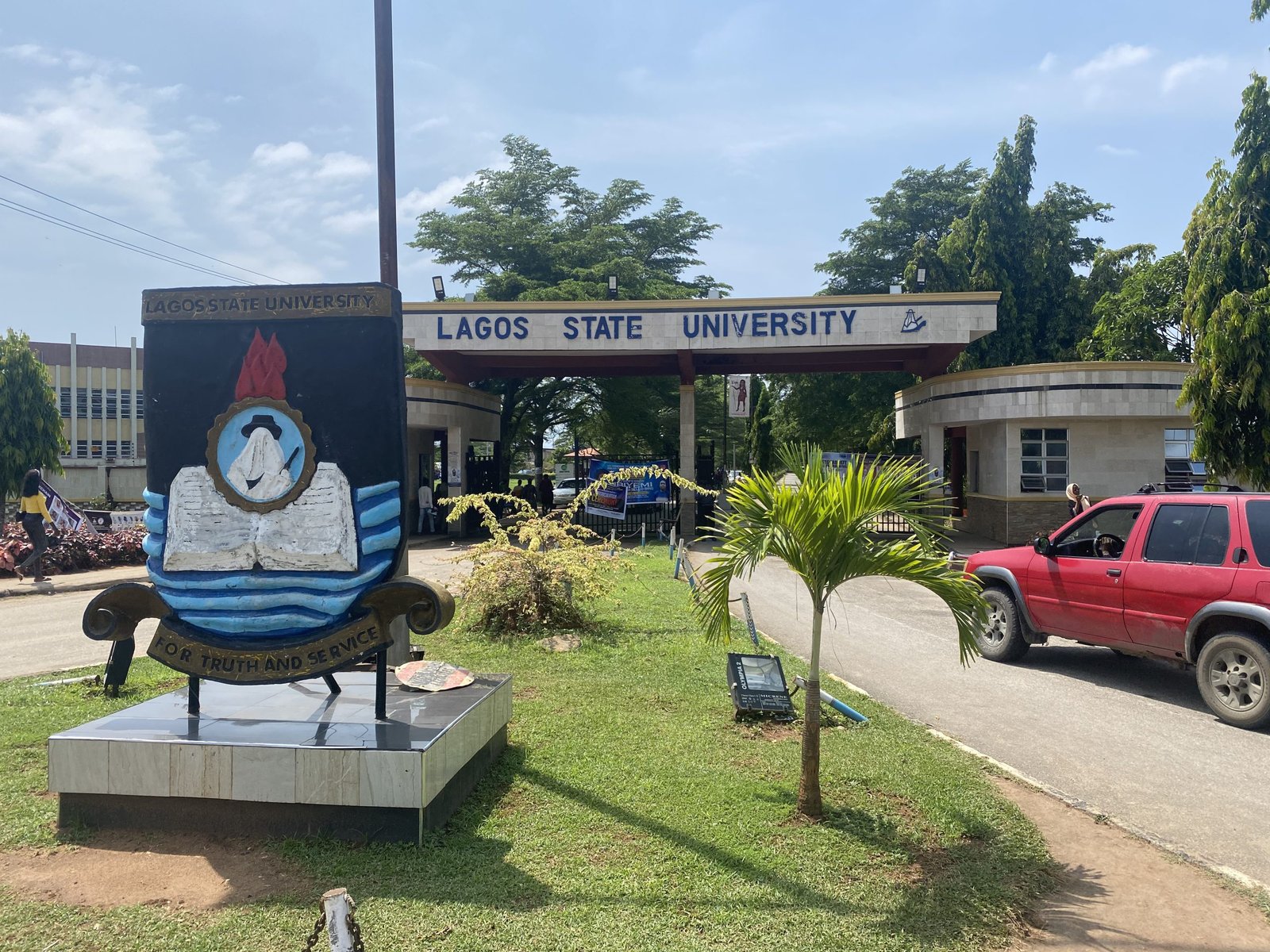
Lagos State University sits at the centre of Nigeria’s commercial capital and draws a huge pool of applicants every year. Knowing the admission process, including the indigene factor, is key to getting in.
This guide walks you through how to gain admission into LASU in 2026: the admission requirements, the JAMB subject combinations by faculty, the cut-off marks for popular courses, and the Post-UTME process.
Lagos State University (LASU) admits via JAMB UTME plus Post-UTME screening, with a minimum JAMB score of 200 for most courses. Medicine and Surgery at the Lagos State University College of Medicine (LASUCOM), Pharmacy, Law and Nursing typically require 250 or higher. LASU admits roughly 7,000 to 9,000 fresh students each year across its multiple campuses, with the main campus in Ojo and LASUCOM at Ikeja.
LASU is a state university owned by the Lagos State Government, founded in 1983. The school has expanded from its Ojo base to multiple campuses across Lagos, including Anthony, Surulere, Ikeja (LASUCOM), and Epe. LASU runs 13 faculties plus the College of Medicine. The school is the leading state university in southern Nigeria and has been a popular choice for Lagos State indigenes, with the catchment advantage and proximity to home as key drivers. This guide walks through admission requirements, cut-offs, the Post-UTME process, costs, and the admission timeline.
LASU’s tuition for Lagos State indigenes is heavily subsidised, which makes it the most affordable competitive university for residents of the state. For non-indigenes, the tuition is higher.
Why LASU
LASU is the leading state university in southern Nigeria, with national reputation in Law, Mass Communication, Business Administration, and the Sciences. The Faculty of Law, located at Ojo, has produced senior lawyers, judges, and political figures over the school’s four-decade history. The Faculty of Engineering is well established, with departments in Civil, Mechanical, Electrical, Chemical, and Computer Engineering.
LASUCOM (the College of Medicine at Ikeja) is among the more recently established medical schools in Nigeria but has gained accreditation and is producing MBBS graduates who write the standard MDCN licensing exam.
LASU’s location in Lagos is a real factor; the Ojo main campus and the Ikeja medical campus put students within the country’s commercial capital, with access to internship and job opportunities during and after studies. The trade-off is the high cost of living in Lagos and the traffic, which makes commuting between campuses challenging.
LASU at a glance
Detail
Value
Full name
Lagos State University
Location
Multi-campus: Ojo (main), Anthony, Ikeja (LASUCOM), Surulere, Epe
Year established
1983
Type
State University (Lagos State Government)
Number of faculties
13 plus the College of Medicine
JAMB minimum score
200 (most courses); 250+ for Medicine, Pharmacy, Law, Nursing
Post-UTME format
CBT, multiple choice on the four UTME subjects
Post-UTME fee
~₦2,500
Tuition (indigenes)
Heavily subsidised, ~₦25,000 to ₦75,000 per session
Tuition (non-indigenes)
Higher, ~₦100,000 to ₦300,000 per session
Annual intake
~7,000 to 9,000 fresh students
Website
lasu.edu.ng
Admission requirements
O Level requirements. LASU requires five credits at C6 or above in not more than two sittings of WAEC, NECO or NABTEB. The five must include English Language, Mathematics, and the three subjects relevant to your course. For Medicine, Biology, Chemistry, and Physics. For Law, Literature in English, Government, and one other arts subject. LASU is strict on the credit grade; D7 in any required subject disqualifies the candidate.
JAMB UTME requirements. LASU sets its institutional minimum at 200 for most courses, raised to 250 for Medicine, Pharmacy, Dentistry, Nursing and Law. The working cut-off for LASUCOM Medicine sits around 260 in recent intakes, slightly below UNILAG. Engineering branches typically need 220 to 230 working. Law at LASU has been competitive, with a working cut-off around 260.
Direct Entry. LASU accepts A Level passes, IJMB, JUPEB, and HND with at least Upper Credit into the second year of the degree. NCE holders apply for Education programmes. DE candidates register with JAMB on the Direct Entry form (₦5,700) and sit a LASU DE screening before the admission is uploaded to CAPS.
JAMB subject combinations by faculty
LASU follows the JAMB brochure. The mapping below covers the major faculties.
College of Medicine (Medicine, Dentistry, Pharmacy, Nursing, Anatomy, Physiology, Medical Laboratory Science): Use of English, Biology, Chemistry, Physics.
Engineering (Civil, Mechanical, Electrical, Chemical, Computer): Use of English, Mathematics, Physics, Chemistry.
Science (Biochemistry, Microbiology, Chemistry, Physics, Mathematics, Statistics): Use of English plus three science subjects.
Law: Use of English, Literature in English, Government, plus one other arts subject.
Arts (English, History, Religious Studies, Languages): Use of English, Literature in English, plus two arts subjects.
Social Sciences (Economics, Sociology, Psychology, Political Science, Public Administration): Use of English, Mathematics, Economics, plus one social science.
Management Sciences (Accounting, Business Administration, Banking and Finance, Marketing, Insurance): Use of English, Mathematics, Economics, plus one of Government, Commerce, Geography.
Communication (Mass Communication, Journalism, Public Relations): Use of English, Literature in English, Government or History, plus one of Economics, CRS, IRS.
Education: Use of English plus the combination for your teaching subject.
Environmental Sciences (Estate Management, Quantity Surveying, Urban Planning, Geography): Use of English, Mathematics, plus two of Physics, Chemistry, Geography, Fine Arts.
Cut-off marks for popular LASU courses
Medicine and Surgery (LASUCOM): 260+ JAMB
Pharmacy: 250+ JAMB
Dentistry: 250+ JAMB
Nursing: 240+ JAMB
Law: 260+ JAMB
Mass Communication: 240+ JAMB
Computer Science: 230+ JAMB
Engineering (Civil, Mechanical, Electrical, Chemical, Computer): 220 to 230+ JAMB
Accounting, Banking and Finance: 220+ JAMB
Economics, Business Administration: 210+ JAMB
Sociology, Psychology, Political Science: 200+ JAMB
Arts (English, History): 200+ JAMB
LASU publishes the official 2026 cut-offs on its admission portal each cycle.
Post-UTME process
LASU Post-UTME is a CBT screening on the four UTME subjects. The fee runs around ₦2,500, paid through the LASU portal. Screening dates are assigned after registration closes; the bulk of candidates write in July or August at the Ojo campus.
The aggregate blends JAMB and Post-UTME, with O Level used as a tie-breaker. LASU’s blend has been around 50/50 in recent cycles. The school’s catchment advantage for Lagos indigenes shows up in the quota allocation rather than in the screening itself.
On screening day, bring your JAMB result slip, the LASU e-slip, a passport-style photograph, and a valid ID. Phones, calculators and watches are not allowed in the hall. Results are published on the LASU portal within two to three weeks.
For preparation, drill the JAMB syllabus a second time with tighter timing. Past LASU Post-UTME questions are available at the campus bookshop and through CBT practice apps. Sit four to six full mocks in the fortnight before screening.
Tuition, accommodation and what it costs in 2026
LASU’s tuition structure is the key distinction from federal universities. As a Lagos State institution, LASU charges Lagos State indigenes (those with a Lagos State indigeneship certificate from a local government) a heavily subsidised tuition, typically ₦25,000 to ₦75,000 per session depending on course. Non-indigenes pay a higher tuition, typically ₦100,000 to ₦300,000 per session, sometimes more for Medicine and Pharmacy.
On top of tuition, candidates pay acceptance fee, development levy, faculty levies, ID and other one-off fees. Total first-year cost for an indigene runs ₦100,000 to ₦200,000 depending on faculty. For a non-indigene, total first-year cost runs ₦200,000 to ₦500,000.
LASU runs on-campus halls at Ojo, with male and female halls allocated by ballot. Hostel fees are around ₦15,000 to ₦25,000 per session. Off-campus housing around Ojo, Iyana-Iba, and Iba runs ₦150,000 to ₦400,000 a year, comparable to off-campus rates around UNILAG. Lagos rent is the major cost driver for most LASU students.
The Ikeja medical campus is in a more central Lagos location; rent in that area runs higher.
The LASU admission timeline
January to February: JAMB UTME registration; pick LASU as first choice.
April to May: sit JAMB UTME.
May to June: JAMB releases results; LASU opens Post-UTME registration.
July to August: LASU Post-UTME screening at Ojo.
August to September: admission decisions upload to CAPS.
September to October: CAPS offers visible; accept on CAPS, pay acceptance and tuition fee on LASU portal.
October to November: online and physical clearance at Ojo.
November onwards: orientation, hostel allocation, lectures begin.
How to check your LASU admission status
Log into JAMB CAPS at portal.jamb.gov.ng. Click Check Admission Status. If LASU has uploaded an offer, accept it.
Log into the LASU admission portal. Confirm the offer.
Pay the acceptance fee within the published window. Indigenes and non-indigenes pay different tuition rates; ensure you have the indigeneship certificate uploaded if applicable.
Print the CAPS admission letter and the LASU admission letter.
Upload O Level credits, JAMB result, Post-UTME score, indigeneship certificate (if applicable) on the LASU portal.
Report for physical clearance at the relevant LASU campus.
Conclusion
LASU admission rewards candidates who prepare thoroughly and understand how its screening and catchment work.
Meet the requirements, choose the right combination, aim above the cut-off, and take the Post-UTME seriously, and a LASU place becomes a realistic goal.
Frequently asked questions
Does LASU give preference to Lagos State indigenes?
Yes. LASU is a state-owned university and gives admission and tuition advantages to Lagos State indigenes. On admission, the catchment quota (35%) heavily favours Lagos indigenes plus the surrounding South-West states. On tuition, indigenes pay a heavily subsidised rate (₦25,000 to ₦75,000 per session) compared to non-indigenes (₦100,000 to ₦300,000 per session). The merit quota (45%) is still open to all candidates nationally, so non-indigenes are not excluded from admission.
How is LASU different from UNILAG for the same course?
LASU is owned by Lagos State; UNILAG is a federal university. Working cut-offs at LASU are 10 to 20 marks below UNILAG for most courses, which makes LASU a realistic backup for candidates who narrowly miss UNILAG. Tuition for Lagos indigenes is much lower at LASU. The academic standards at LASU are well established, especially in Law, Mass Communication, and the Sciences. The trade-off is sometimes infrastructure: LASU’s facilities are improving but still lag UNILAG in some faculties.
How do I prove I am a Lagos State indigene?
Indigeneship is established through the local government area (LGA) of origin in Lagos State. You obtain an indigeneship certificate from your LGA office in Lagos, which states your name, LGA, and confirmation of indigeneship. The certificate is required at admission clearance to access the subsidised tuition rate. If your family is not from Lagos but has lived there for decades, you are a resident but not an indigene; tuition is at the non-indigene rate. The distinction matters because it affects the total cost of education over four to six years significantly.
How much does first year at LASU cost for a non-indigene?
Budget around ₦300,000 to ₦700,000 for the first year. Tuition for non-indigenes runs ₦100,000 to ₦300,000 per session. Acceptance, levies, ID and other charges add ₦60,000 to ₦150,000. Hostel costs add ₦15,000 to ₦25,000 if you secure on-campus; off-campus rent in Ojo runs ₦150,000 to ₦400,000 a year. Personal expenses (food, transport, books) add ₦35,000 to ₦60,000 a month in Lagos. The total is higher than at UNILAG for a non-indigene, but for a Lagos indigene the subsidised tuition makes LASU significantly cheaper than UNILAG.
Is LASUCOM Medicine recognised internationally?
LASUCOM is accredited by the Medical and Dental Council of Nigeria (MDCN), the binding body for medical training in Nigeria. LASUCOM MBBS graduates write the same MDCN licensing exam as UNILAG, UI, and OAU graduates, and the resulting license is the same. For international practice (UK PLAB, US USMLE), LASUCOM is in the World Directory of Medical Schools, which is the global recognition reference. Graduates from LASUCOM have qualified for foreign clinical positions through the standard licensing exams.
Which campus will I study at?
Most undergraduate programmes sit at the Ojo main campus. The College of Medicine is at the Ikeja campus near LASUTH (Lagos State University Teaching Hospital). Some Education and specialist programmes are at the Surulere and Anthony campuses. Confirm the campus on your admission letter; the LASU shuttle service runs between campuses but commuting in Lagos traffic is a real factor in your daily routine.
Lagos-based education writer covering JAMB, WAEC and NECO, and tertiary admissions across Nigeria. Chinedu tracks cut-off marks, admission lists, and school portal updates so students and parents do not have to.