JAMB, WAEC, and admissions guides for Nigerian students
How to Gain Admission into Babcock University: 2026 Guide
Babcock University is one of the most established private universities in Nigeria, popular for courses in medicine, the sciences and business. Admission there is as much about planning your finances as your grades.
This guide covers how to gain admission into Babcock in 2026: the admission requirements, the JAMB subject combinations by college, the cut-off marks for popular courses, and what tuition and accommodation cost.
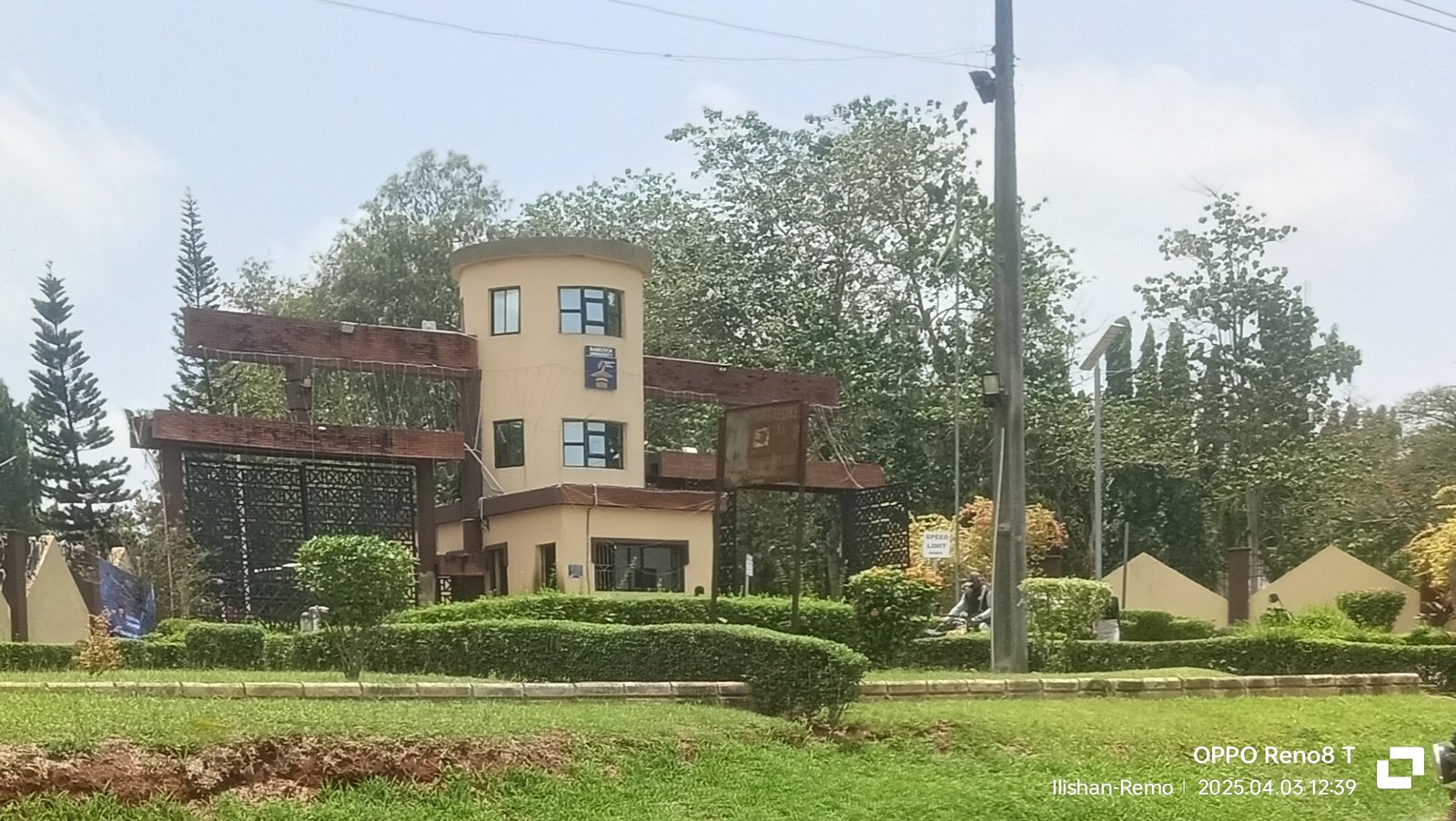
Babcock University admits via JAMB UTME plus its own entrance examination, with JAMB scores from 180 and above accepted for most programmes. Medicine and Surgery, Pharmacy, Law and Nursing typically require 240 or higher with strong internal screening. Babcock is a residential private university owned by the Seventh-day Adventist Church and located in Ilishan-Remo, Ogun State, about 90 minutes from Lagos.
Babcock is among the oldest and most established private universities in Nigeria, founded in 1959 as a missionary college and granted university status in 1999. The school runs the Benjamin S. Carson Sr. College of Medicine, which has trained MBBS graduates for over a decade. Babcock also runs Law, Nursing, Pharmacy, Engineering, Computing, Business, Mass Communication, and Education programmes. This guide walks through the admission requirements, the tuition (which is the main filter), the residential life, and the admission timeline.
Babcock is a faith-aligned environment, with Adventist principles shaping daily life: chapel services, dress code, dietary practices (the campus is largely vegetarian), and weekend sabbath observance.
Why Babcock
Babcock is well established with one of the longer private university tracks in Nigeria. The Benjamin S. Carson Sr. College of Medicine (named after the American neurosurgeon, an Adventist) has trained MBBS graduates who write the MDCN licensing exam and practise across Nigeria. The Faculty of Law has a recognised reputation, with graduates entering the Nigerian Law School and going on to practice.
The campus is residential, modern and well-maintained. Halls of residence, lecture theatres, the library, the chapel, the sports complex, and the school clinic are all on the same campus.
Babcock’s faith ethos is strict but consistent. Students attend chapel, observe sabbath, and follow the campus code of conduct. The dietary practice on campus is largely vegetarian, in line with Adventist principles. Students from other faiths can attend; the school does not screen them out, but every student lives by the same campus standards.
Babcock at a glance
Detail
Value
Full name
Babcock University
Location
Ilishan-Remo, Ogun State
Year established
1959 (university status 1999)
Type
Private University (Seventh-day Adventist Church)
Number of schools/colleges
9 plus the College of Medicine
JAMB minimum score
180 to 200 (most courses); 240+ working for Medicine, Law
Internal screening
Babcock University Entrance Exam
Tuition per session
~₦1 million to ₦2.5 million
Annual intake
~3,000 to 4,000 fresh students
Website
babcock.edu.ng
Admission requirements
O Level requirements. Babcock requires five credits at C6 or above in not more than two sittings of WAEC, NECO or NABTEB. The five must include English Language, Mathematics, and the three subjects relevant to your course. Babcock sometimes prefers a single-sitting result for Medicine and Law, especially when the candidate pool is large.
The school is strict on the credit grade; D7 in any required subject disqualifies the candidate. Mathematics credit is required for every science, engineering, business, and management programme.
JAMB UTME requirements. Babcock’s published JAMB minimum is 180. The working cut-off for Medicine is 240 plus a strong internal screening; for Law it is 240+; for Engineering 200 to 220; for Computer Science 210+. Like other private schools, the tuition is the bigger filter than the JAMB score.
The Babcock Entrance Examination. Candidates sit Babcock’s own entrance exam in addition to JAMB. The exam tests aptitude, English, and subject-specific knowledge. Strong performance can lift a moderate JAMB score; weak performance can derail a strong JAMB.
Direct Entry. Babcock accepts A Level, IJMB, JUPEB, and HND with at least Upper Credit into the second year of the degree.
JAMB subject combinations by college
Babcock follows the JAMB brochure. The mapping below covers the major programmes.
Benjamin S. Carson Sr. College of Medicine (Medicine, Dentistry, Pharmacy, Nursing, Anatomy, Physiology, Medical Laboratory Science, Public Health): Use of English, Biology, Chemistry, Physics.
School of Engineering (Software Engineering, Mechatronics, Electrical, Computer, Civil): Use of English, Mathematics, Physics, Chemistry.
School of Computing and Engineering Sciences (Computer Science, Information Technology, Cybersecurity): Use of English, Mathematics, Physics, plus Chemistry or Biology.
School of Science and Technology (Microbiology, Biochemistry, Industrial Chemistry, Industrial Mathematics, Physics with Electronics): Use of English plus three science subjects.
School of Law and Security Studies (Law): Use of English, Literature in English, Government, plus one other arts subject.
School of Management Sciences (Accounting, Banking and Finance, Business Administration, Marketing, Insurance): Use of English, Mathematics, Economics, plus one of Government, Commerce.
School of Education and Humanities (English, Religious Studies, History, Mass Communication, Music): Use of English, Literature in English, plus two arts subjects.
School of Public and Allied Health (Nursing Sciences, Public Health Nursing): Use of English, Biology, Chemistry, Physics.
Cut-off marks for popular Babcock courses
Medicine and Surgery: 240+ JAMB with strong internal screening
Pharmacy: 230+ JAMB
Law: 240+ JAMB
Nursing Sciences: 220+ JAMB
Computer Science, Software Engineering: 210+ JAMB
Mechatronics Engineering: 210+ JAMB
Mass Communication: 210+ JAMB
Accounting, Banking and Finance: 200+ JAMB
Public Health, Medical Laboratory Science: 220+ JAMB
Microbiology, Biochemistry: 200+ JAMB
Education, Arts: 180+ JAMB
Tuition, accommodation and what it costs in 2026
Tuition is the main filter. Babcock fees run between ₦1 million and ₦2.5 million per session depending on the programme. Medicine sits at the higher end; Arts and Business at the lower end. A six-year MBBS programme at Babcock costs total around ₦10 million to ₦15 million over the full degree.
Babcock is fully residential. Hostel assignment is part of the tuition package. Each student lives on campus throughout the four to six year degree. Off-campus living is not the default and is only allowed in special circumstances with the school’s approval.
Beyond tuition, candidates pay acceptance fee, ID, examination, and faculty levies (₦80,000 to ₦200,000 per session). Personal expenses (food beyond the campus canteen plan, books, transport, allowance) add ₦20,000 to ₦40,000 a month. The total annual cost runs between ₦1.3 million and ₦3 million for most programmes, and ₦2.5 million to ₦3.5 million for Medicine.
The Babcock admission timeline
January to February: JAMB UTME registration; pick Babcock as first choice.
April to May: sit JAMB UTME.
May to June: Babcock opens entrance exam registration; sit the school exam.
June to July: entrance exam results released; Babcock shortlists candidates.
July to August: admission decisions upload to CAPS and the Babcock portal; accept the offer.
August to September: pay tuition for first session; complete online clearance.
September: resumption at Ilishan campus; orientation, hostel allocation.
October onwards: first semester lectures.
How to check your Babcock admission status
Log into the Babcock admission portal at babcock.edu.ng. Check your application status.
Cross-check on JAMB CAPS at portal.jamb.gov.ng; accept the offer if uploaded.
Pay the acceptance fee and first session tuition within the published window.
Upload O Level credits, JAMB result, entrance exam result, and other required documents.
Report to Ilishan campus on the resumption date for orientation and registration.
Conclusion
Babcock admission suits candidates who meet its academic requirements and have planned for the cost of study.
Meet the requirements, choose the right combination, clear the cut-off, and prepare for the screening, and you give yourself a strong shot at a Babcock place.
Frequently asked questions
How much is Babcock University tuition?
Tuition runs between ₦1 million and ₦2.5 million per session depending on the programme. Medicine sits at the higher end, around ₦2 million to ₦2.5 million per session. Law and Pharmacy run ₦1.5 million to ₦2 million. Arts and Business at the lower end run ₦1 million to ₦1.5 million. Accommodation is bundled. The total cost of a four-year degree at Babcock runs roughly ₦4 million to ₦10 million; a six-year MBBS runs ₦12 million to ₦15 million.
Do I need to be a Seventh-day Adventist to study at Babcock?
No. Babcock admits students from all faiths, and the student body includes Muslims, Catholics, Pentecostals, and others. However, every student lives by the Adventist-rooted campus code of conduct: chapel attendance, sabbath observance on Saturday, dress code, no alcohol or smoking on campus, and largely vegetarian dining options. Students who can live by the campus standards do well; those who chafe against the structure may not. Read the school’s prospectus carefully before accepting an admission.
Is the Babcock medical school recognised by MDCN?
Yes. The Benjamin S. Carson Sr. College of Medicine is accredited by the Medical and Dental Council of Nigeria. Graduates write the same MDCN licensing exam as graduates from UI, UNILAG, and other accredited medical schools, and the resulting license is the same. The College is also listed in the World Directory of Medical Schools, which is the global recognition reference for international clinical positions.
How does Babcock compare with Covenant University?
Both are top private universities. Babcock is older (1959 vs CU 2002), has stronger Medicine and Law programmes, and is Adventist; CU has stronger Engineering and Computing programmes, is owned by Living Faith, and has more modern infrastructure. Tuition is broadly similar (₦1m to ₦2.5m per session at both). The choice often comes down to the faith environment and the programme of interest: Babcock for Medicine and Law, CU for Engineering and Computing.
Is Babcock residential?
Yes, fully residential. Every student lives on campus in assigned halls of residence throughout the four to six year degree. Off-campus living is not the standard; special approval is required and is rarely granted. The residential model is part of Babcock’s identity and tied to the faith ethos.
Can I apply for scholarships at Babcock?
Babcock offers a limited number of merit-based and need-based scholarships through the school’s scholarship office. Merit scholarships are awarded to candidates with exceptional JAMB scores, strong O Level grades, and strong performance on the Babcock entrance exam. Need-based assistance is available for a small share of admitted students. Apply through the school’s scholarship portal during the application window. Most scholarships cover a portion of tuition, not the full amount.
How to Gain Admission into ABUAD (Afe Babalola… ABUAD (Afe Babalola University, Ado-Ekiti) admits via JAMB UTME plus its own screening. Medicine, Law, Pharmacy and Engineering. Full guide.
Lagos-based education writer covering JAMB, WAEC and NECO, and tertiary admissions across Nigeria. Chinedu tracks cut-off marks, admission lists, and school portal updates so students and parents do not have to.