JAMB, WAEC, and admissions guides for Nigerian students
How to Gain Admission into ABUAD (Afe Babalola University): 2026 Guide
Afe Babalola University, Ado-Ekiti is one of Nigeria’s fastest-rising private universities, known for its modern facilities and strong medical and law programmes. Admission there is competitive and well organised.
This guide explains how to gain admission into ABUAD in 2026: the admission requirements, the JAMB subject combinations by college, the cut-off marks for popular courses, and what tuition and accommodation cost.
Afe Babalola University, Ado-Ekiti (ABUAD) admits via JAMB UTME plus its own entrance examination, with JAMB scores from 180 and above accepted for most programmes. Medicine and Surgery, Law, Pharmacy, Dentistry and Engineering typically require 230 or higher with strong internal screening. ABUAD is a private university founded in 2009 by Chief Afe Babalola, a senior lawyer, located in Ado-Ekiti, Ekiti State.
ABUAD has grown rapidly to become one of the most-cited private universities in Nigeria, with strong programmes in Medicine, Law, Pharmacy, Nursing, Engineering, and the Sciences. The university owns Afe Babalola University Multi-System Hospital (AB-UTH), a 400-bed teaching hospital on campus that serves as the clinical training base for Medicine and Pharmacy candidates. ABUAD also runs a Law school recognised by the Nigerian Law School. This guide walks through admission requirements, internal screening, tuition (the main filter), and the residential life.
ABUAD is non-denominational; the school accepts students of all faiths without enforcing a single faith ethos on campus.
Why ABUAD
ABUAD’s growth in 15 years has been one of the fastest of any Nigerian university. The school has invested heavily in infrastructure: modern lecture theatres, well-equipped laboratories, a teaching hospital, sports facilities, and halls of residence. The Faculty of Law has gained recognition; the Faculty of Medicine is MDCN-accredited.
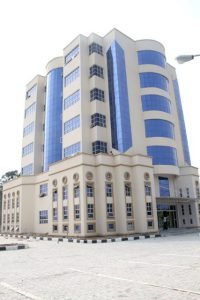
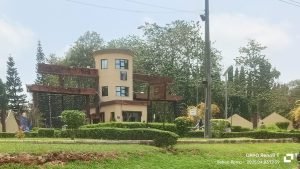
The campus is on a 130-hectare site in Ado-Ekiti, with everything purpose-built. Halls of residence, the medical college, the senate building, the library, the chapel, the sports facilities, and the teaching hospital are all on or adjacent to the same campus.
ABUAD does not enforce a faith ethos. There is a chapel and a mosque on campus; students attend their preferred services voluntarily. The dress code is moderate (smart-casual). The code of conduct covers academic integrity and general decorum without being faith-prescriptive. This non-denominational stance distinguishes ABUAD from Covenant, Babcock, and Bowen.
ABUAD at a glance
Detail
Value
Full name
Afe Babalola University, Ado-Ekiti
Location
Ado-Ekiti, Ekiti State
Year established
2009
Type
Private University (non-denominational)
Number of colleges
9 plus the College of Medicine
JAMB minimum score
180 to 200 (most courses); 230+ working for Medicine, Law
Internal screening
ABUAD Entrance Examination
Tuition per session
~₦1.5 million to ₦3 million
Annual intake
~2,500 to 3,500 fresh students
Website
abuad.edu.ng
Admission requirements
O Level requirements. ABUAD requires five credits at C6 or above in not more than two sittings of WAEC, NECO or NABTEB. The five must include English Language, Mathematics, and the three subjects relevant to your course. For Medicine, those three are Biology, Chemistry, and Physics. For Law, Literature in English, Government, and one other arts subject.
ABUAD is strict on the credit grade. D7 in any required subject disqualifies the candidate from the relevant course.
JAMB UTME requirements. ABUAD’s published JAMB minimum is 180 to 200. Working cut-offs for popular courses: Medicine 230+, Law 230+, Pharmacy 220+, Engineering 200 to 220+, Nursing 220+, Computer Science 210+.
ABUAD Entrance Examination. Candidates sit ABUAD’s entrance test at the Ado-Ekiti campus. The test covers aptitude, English, Mathematics, and subject-specific knowledge. Strong performance lifts admission chances.
Direct Entry. ABUAD accepts A Level, IJMB, JUPEB, and HND with at least Upper Credit into the second year of the degree.
JAMB subject combinations by college
College of Medicine and Health Sciences (Medicine, Dentistry, Pharmacy, Nursing, Anatomy, Physiology, Medical Laboratory Science, Optometry): Use of English, Biology, Chemistry, Physics.
College of Engineering (Civil, Mechanical, Electrical, Computer, Chemical and Petroleum): Use of English, Mathematics, Physics, Chemistry.
College of Law: Use of English, Literature in English, Government, plus one other arts subject.
College of Sciences (Industrial Chemistry, Biochemistry, Microbiology, Industrial Mathematics, Computer Science, Software Engineering): Use of English plus relevant science subjects.
College of Social and Management Sciences (Accounting, Banking and Finance, Business Administration, Economics, International Relations, Political Science, Public Administration): Use of English, Mathematics, Economics, plus one of Government, Commerce.
College of Arts (English, History, Religious Studies): Use of English, Literature in English, plus two arts subjects.
College of Environmental Sciences (Architecture, Estate Management, Quantity Surveying): Use of English, Mathematics, plus two of Physics, Chemistry, Geography, Fine Arts.
College of Agriculture, Food Sciences and Veterinary Medicine: Use of English, Chemistry, Biology, plus Mathematics or Physics (Veterinary needs Physics).
College of Education: Use of English plus combination for the teaching subject.
Cut-off marks for popular ABUAD courses
Medicine and Surgery: 230+ JAMB with strong entrance test
Tuition is the main filter. ABUAD fees run between ₦1.5 million and ₦3 million per session depending on the programme. Medicine, Dentistry and Pharmacy sit at the higher end. Engineering and Law in the middle. Arts and Business at the lower end. A six-year MBBS programme at ABUAD costs total around ₦12 million to ₦16 million.
ABUAD is fully residential. Each student is assigned a hostel room on admission. The school has built modern halls of residence with shared rooms for two to four students.
Beyond tuition (which usually includes accommodation), candidates pay acceptance fee, ID, faculty levies, and exam fees (₦150,000 to ₦300,000 per session). Personal expenses (food beyond canteen, books, transport, allowance) add ₦25,000 to ₦40,000 a month. The total annual cost at ABUAD runs between ₦1.8 million and ₦3.5 million for most programmes, and ₦3 million to ₦3.5 million for Medicine.
The ABUAD admission timeline
January to February: JAMB UTME registration; pick ABUAD as first choice.
April to May: sit JAMB UTME.
May to June: ABUAD opens entrance exam registration; sit the exam at Ado-Ekiti.
June to July: entrance exam results released; admission decisions begin.
July to August: admission decisions upload to CAPS and ABUAD portal; accept offer.
August to September: pay tuition; complete clearance.
September: resumption at Ado-Ekiti campus; orientation, hostel allocation.
October onwards: first semester lectures.
How to check your ABUAD admission status
Log into the ABUAD admission portal at abuad.edu.ng. Check your application status.
Cross-check on JAMB CAPS at portal.jamb.gov.ng; accept the offer.
Pay the acceptance fee and first session tuition.
Upload required documents.
Report to Ado-Ekiti campus on the resumption date.
The ABUAD campus experience
The Ado-Ekiti campus is purpose-built, with halls of residence, lecture theatres, the teaching hospital, the senate building, the library, and the sports complex within walking distance. The school invests heavily in infrastructure; the laboratories and the medical college equipment are among the more modern in Nigerian universities.
Daily life is structured. Students are expected at lectures on time, hostel curfew applies in the evenings, and weekends include programmed activities. The school manages the canteen, the bus service, and the medical clinic on campus. Internet access is reliable across the campus.
The Faculty of Law has its own dedicated building, and Law students benefit from access to ABUAD’s law library and moot court facilities. The Medical College’s on-campus teaching hospital means clinical years are spent within walking distance of the lecture halls, simplifying the daily schedule.
For students from Lagos, Ibadan or Abuja, Ado-Ekiti is reachable in 3 to 5 hours by road. The school runs scheduled bus services between Ado-Ekiti and Lagos at weekends, useful for students travelling home.
Conclusion
ABUAD admission suits candidates who meet its standards and have planned for the investment that private study requires.
Meet the requirements, choose the right combination, clear the cut-off, and prepare for the screening, and you put yourself in strong contention for ABUAD.
Frequently asked questions
How much is ABUAD tuition?
Tuition runs between ₦1.5 million and ₦3 million per session depending on the programme. Medicine, Dentistry, and Pharmacy sit at the higher end (₦2.5 million to ₦3 million per session). Engineering and Law run ₦1.8 million to ₦2.5 million. Arts and Business at the lower end run ₦1.5 million to ₦2 million. Accommodation is bundled into tuition for most programmes. Total cost of a four-year degree at ABUAD: ₦6 million to ₦12 million; six-year MBBS: ₦12 million to ₦16 million.
Is ABUAD Medicine recognised by MDCN?
Yes. The ABUAD College of Medicine and Health Sciences is accredited by the Medical and Dental Council of Nigeria. Graduates write the same MDCN licensing exam as graduates from federal universities, and the resulting license is the same. The on-campus teaching hospital (AB-UTH) provides clinical training. ABUAD is also listed in the World Directory of Medical Schools.
Does ABUAD have a faith requirement?
No. ABUAD is non-denominational. The campus has both a chapel and a mosque, and students attend their preferred services voluntarily. The dress code is moderate. The code of conduct covers academic integrity and general decorum without faith-prescriptive rules. This makes ABUAD a flexible choice for students of all faiths or no specific faith.
How does ABUAD compare with Babcock or Covenant?
ABUAD is younger (founded 2009) than Babcock (1959) or Covenant (2002) but has grown rapidly. Working cut-offs and tuition are broadly similar across the three. ABUAD’s distinguishing features are its non-denominational stance, the on-campus teaching hospital for Medicine and Pharmacy candidates, and the strong Law school. Babcock has more years of Medicine intake; Covenant has stronger Engineering and Computing. The choice often comes down to faith environment preference and specific programme strengths.
Is ABUAD residential?
Yes. ABUAD is fully residential. Every student is assigned a hostel room on admission and lives on campus throughout the four to six year degree. The residential model is part of the school’s identity, with modern halls and shared rooms. Off-campus living is rare and requires school approval.
Can I apply for scholarships at ABUAD?
ABUAD offers merit-based and need-based scholarships through the Founder’s scholarship scheme and the school’s bursary office. Merit scholarships go to candidates with exceptional JAMB scores, strong entrance test results, and strong O Level grades. Need-based assistance is also available. Apply through the school’s scholarship portal during the application window. Most scholarships cover a portion of tuition; full-tuition scholarships are very limited and highly competitive.
Lagos-based education writer covering JAMB, WAEC and NECO, and tertiary admissions across Nigeria. Chinedu tracks cut-off marks, admission lists, and school portal updates so students and parents do not have to.