JAMB, WAEC, and admissions guides for Nigerian students
How to Gain Admission into FUTA (Federal University of Technology, Akure): 2026
The Federal University of Technology, Akure is one of Nigeria’s leading technology-focused universities, ideal for candidates set on engineering, the sciences and applied courses. Admission there rewards the well-prepared.
This guide covers how to gain admission into FUTA in 2026: the admission requirements, the JAMB subject combinations by school, the cut-off marks for popular courses, and the Post-UTME process.
The Federal University of Technology, Akure (FUTA) admits via JAMB UTME plus Post-UTME screening, with an institutional minimum JAMB score of 180 to 200. Top courses such as Computer Engineering, Software Engineering, and Architecture typically need a working cut-off of 230 to 240. FUTA is one of three federal universities of technology in Nigeria (alongside Minna and Owerri) and is the largest of the three by enrolment.
FUTA is in Akure, Ondo State. The main campus is at Obakekere. FUTA runs nine schools (its equivalent of faculties): Engineering and Engineering Technology, Computing, Sciences, Agriculture and Agricultural Technology, Earth and Mineral Sciences, Environmental Technology, Health and Health Technology, Management Technology, and Education. The school is heavy on the applied and technological side; it does not run Law, Arts, or pure Social Sciences in the traditional sense, although it offers management-related programmes. This guide covers the admission requirements, cut-off bands, Post-UTME process, real costs, and the admission timeline.
FUTA is the natural pick for candidates aiming at engineering, technology, computing, and applied sciences. If your goal is Law, Medicine, or Arts, this is not your school.
Why FUTA
FUTA was established as a specialist technology university with the mandate to produce engineers, scientists, and applied technology graduates. Over five decades, the school has built one of the strongest engineering programmes in the country, with departments in Civil, Mechanical, Electrical, Electronic, Industrial, Mining, Petroleum, Agricultural, Computer, and Software Engineering.
The School of Computing is among the more active in Nigeria, with Computer Science, Software Engineering, Cybersecurity, and Information Technology programmes. The School of Earth and Mineral Sciences trains geologists and mining engineers. The School of Agriculture is a serious agricultural training institution, with the Crop, Animal, and Forestry departments.
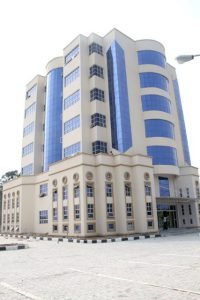
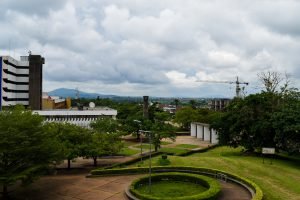
The Obakekere campus is large but largely self-contained, with halls of residence, lecture theatres, the senate building, the library, and the sports complex within walking distance. Akure is a mid-sized city with a moderate cost of living, sitting between Lagos and Ile-Ife on the affordability scale.
FUTA at a glance
The snapshot below covers the headline figures.
Detail
Value
Full name
Federal University of Technology, Akure
Location
Akure, Ondo State (Obakekere main campus)
Year established
1981
Type
Federal University (Technology)
Number of schools (faculties)
9
JAMB minimum score
180 to 200 (most courses); 230+ working for top tech courses
Post-UTME format
CBT, multiple choice on the four UTME subjects
Post-UTME fee
~₦2,000 to ₦2,500
Aggregate formula
JAMB and Post-UTME blended
Annual intake
~5,000 to 7,000 fresh students
Website
futa.edu.ng
Admission requirements
O Level requirements. FUTA requires five credits at C6 or above in not more than two sittings of WAEC, NECO or NABTEB. The five must include English Language, Mathematics, and three subjects relevant to the course. For Engineering, the three are Mathematics, Physics, Chemistry plus one of Biology or Further Mathematics. For Computer Science, the three are Mathematics, Physics, and one of Chemistry, Biology, Economics. For Agriculture, Chemistry, Biology, and one of Mathematics, Physics, Geography.
FUTA is strict on Mathematics; a D7 in O Level Mathematics disqualifies the candidate from any engineering or science course at the school.
JAMB UTME requirements. FUTA’s institutional minimum sits at 180 to 200. Working cut-offs for popular tech courses run higher: Computer Science 230+, Software Engineering 230+, Architecture 220+, the engineering branches 210 to 230. The headline competitive courses are in computing and the high-demand engineering branches.
Direct Entry. FUTA accepts A Level passes, IJMB, JUPEB, ND and HND with at least Upper Credit into the second year of the degree. NCE holders apply for Education programmes (FUTA’s School of Education trains teachers in technology subjects). DE candidates register with JAMB on the Direct Entry form (₦5,700) and sit a FUTA DE screening before admission is uploaded to CAPS. DE intake is particularly active for Engineering branches where polytechnic ND/HND holders pivot to a degree.
JAMB subject combinations by school
FUTA’s nine schools have specific subject combinations. The list below covers the major programmes.
School of Engineering (Civil, Mechanical, Electrical, Electronic, Industrial, Mining, Petroleum, Agricultural): Use of English, Mathematics, Physics, Chemistry.
School of Computing (Computer Science, Software Engineering, Information Technology, Cybersecurity): Use of English, Mathematics, Physics, plus one of Chemistry, Biology, Economics.
School of Sciences (Biochemistry, Microbiology, Chemistry, Physics, Mathematics, Statistics): Use of English plus three sciences.
School of Agriculture (Crop, Animal, Forestry, Fisheries, Agricultural Economics): Use of English, Chemistry, Biology, plus Mathematics or Physics.
School of Earth and Mineral Sciences (Geology, Mining, Applied Geophysics, Meteorology): Use of English, Mathematics, Physics, plus Chemistry or Geography.
School of Environmental Technology (Architecture, Quantity Surveying, Building, Urban Planning, Estate Management): Use of English, Mathematics, Physics, plus one of Chemistry, Geography, Fine Arts.
School of Health and Health Technology (Anatomy, Physiology, Public Health, Medical Laboratory Technology): Use of English, Biology, Chemistry, Physics.
School of Management Technology (Project Management, Industrial Mathematics, Transport Management): Use of English, Mathematics, Economics, plus one of Government, Commerce, Geography.
School of Education (Technology-based teaching subjects): Use of English plus the combination for the teaching subject.
Cut-off marks for popular FUTA courses
The working JAMB cut-offs below reflect the bands candidates needed in recent intakes.
Computer Science: 240+ JAMB
Software Engineering: 240+ JAMB
Cybersecurity: 230+ JAMB
Information Technology: 220+ JAMB
Electrical and Electronics Engineering: 230+ JAMB
Mechanical Engineering: 220+ JAMB
Civil and Environmental Engineering: 220+ JAMB
Petroleum Engineering: 220+ JAMB
Industrial Engineering: 210+ JAMB
Architecture: 220+ JAMB
Quantity Surveying, Estate Management: 200 to 210+ JAMB
Meteorology, Geology: 200+ JAMB
Agriculture, Forestry: 180 to 200+ JAMB
Industrial Mathematics, Statistics: 200+ JAMB
Post-UTME process
FUTA Post-UTME is a CBT screening on the four UTME subjects. The fee runs around ₦2,000 to ₦2,500, paid through the FUTA portal. Screening dates are assigned after registration closes; the bulk of candidates write in July or August at the Obakekere campus.
The aggregate blends JAMB and Post-UTME with a school-specific weight. FUTA emphasises Mathematics and Physics performance heavily for the engineering and computing programmes; a candidate with a weak JAMB Mathematics score can be filtered out at the Post-UTME stage regardless of the overall JAMB total.
On screening day, bring your JAMB result slip, the FUTA e-slip, a passport-style photograph, and a valid ID. Phones, calculators and watches are not permitted in the hall. Results are published on the FUTA portal within two to three weeks.
For preparation, drill the JAMB syllabus a second time with tighter timing. FUTA’s screening tends to weight the application-style questions in Mathematics, Physics, and the subject-specific paper for your target course. Past FUTA Post-UTME questions are available at the campus bookshop; sit four to six full mocks in the fortnight before screening.
Tuition, accommodation and what it costs in 2026
FUTA is a federal university, so tuition is officially free. Each fresh student pays acceptance fee, development levy, school (faculty) levies, ID, examination, library, and medical fees. Total first-year obligation in 2025 ran between ₦60,000 and ₦140,000 for most schools, rising to ₦180,000 to ₦250,000 for the School of Health and Health Technology where laboratory fees apply.
FUTA runs on-campus halls and federal university hostels in Akure. Halls of residence include Adekunle Ajasin Hall, Akoko Hall, FUTA Halls 1 to 5, and others. On-campus hostel costs around ₦12,000 to ₦20,000 per session, allocated by ballot.
Off-campus housing in Akure around Obakekere, Ijapo, and Alagbaka runs ₦60,000 to ₦200,000 a year. Akure has a moderate cost of living, sitting between Lagos and Ilorin.
For Engineering students, the workload (drawing studios, lab work, design projects) means proximity to campus is more important than for some other programmes. Plan accommodation with this in mind.
The FUTA admission timeline
FUTA’s admission cycle runs on the standard federal university calendar.
January to February: JAMB UTME registration; pick FUTA as first choice.
April to May: sit JAMB UTME.
May to June: JAMB releases UTME results; FUTA announces Post-UTME registration.
July to August: FUTA Post-UTME screening at Obakekere campus.
August to September: admission decisions upload to CAPS in batches.
September to October: CAPS offers visible; accept on CAPS, pay acceptance fee on FUTA portal.
October to November: online and physical clearance at Obakekere.
November onwards: orientation, hostel allocation, registration, lectures begin.
How to check your FUTA admission status
Monitor CAPS and the FUTA portal after Post-UTME.
Log into JAMB CAPS at portal.jamb.gov.ng. Click Check Admission Status. If FUTA has uploaded an offer, accept it.
Log into the FUTA admission portal. Confirm the offer.
Pay the acceptance fee within the published window.
Print the CAPS admission letter and the FUTA admission letter.
Upload O Level credits, JAMB result, and Post-UTME score on the FUTA portal.
Report for physical clearance at Obakekere on the date specified.
Conclusion
FUTA admission suits candidates with a clear focus on science and technology and the preparation to match.
Meet the requirements, pick the right combination, clear the cut-off, and prepare for the Post-UTME, and you give yourself a strong chance at Akure.
Frequently asked questions
Does FUTA offer Medicine or Law?
No. FUTA does not run Medicine and Surgery, Law, or pure Arts programmes. The school is dedicated to technology, engineering, computing, applied sciences, environmental design, agriculture, and management. Candidates aiming at Medicine should look to UI, UNILAG, OAU, UNIBEN, ABU, or UNN. Candidates aiming at Law should look to the same schools or to specialist law schools. The School of Health and Health Technology at FUTA offers related programmes (Anatomy, Physiology, Medical Laboratory Technology, Public Health) but not the MBBS or LLB degrees.
How does FUTA compare with UNILAG for engineering?
FUTA was purpose-built as a technology university and has been training engineers for over four decades. UNILAG’s engineering programmes are also strong but sit within a broader university with humanities and social sciences. For pure engineering focus, FUTA’s specialisation shows; for a broader university experience, UNILAG offers more. Working cut-offs at FUTA for engineering are 10 to 20 marks below UNILAG, which makes FUTA a realistic pick for candidates with strong scores who want assured engineering admission.
Is on-campus accommodation guaranteed for fresh students?
FUTA prioritises 100-level students for on-campus halls. Most fresh students secure a hall in their first year, but it is not guaranteed each cycle. If your hall ballot does not succeed, off-campus housing in Obakekere and nearby Akure areas is the fallback. Returning students often move off campus by year two or three.
How much does first year at FUTA cost?
Budget around ₦180,000 to ₦350,000 for the first year. Official school charges (acceptance, levies, ID, exam, library) come to ₦60,000 to ₦250,000. Hostel costs add ₦12,000 to ₦20,000 if you secure on-campus accommodation. Off-campus rent in Obakekere or nearby Akure areas runs ₦60,000 to ₦200,000 a year. Personal expenses (food, transport, books, drawing equipment for engineering and architecture students) add ₦25,000 to ₦45,000 a month.
Can I transfer from another university to FUTA?
Yes. FUTA accepts inter-university transfers into 200 level for candidates who have completed at least one full year at another approved university with a strong CGPA. The receiving department must have capacity. The transfer applicant must meet FUTA’s entry requirements (especially the Mathematics requirement for engineering and computing). Apply through FUTA’s admission office with a transcript and a letter from the current school confirming good standing.
Is FUTA strict on the catchment area?
FUTA applies the JAMB-mandated 45-35-20 merit-catchment-ELDS split. Ondo State and the surrounding South-West states (Lagos, Ogun, Oyo, Ekiti, Osun) fall in the catchment pool. Candidates from these states have an edge on the catchment quota. The merit quota (45%) is open nationally. ELDS (20%) prioritises candidates from JAMB-designated educationally-less-developed states.
Lagos-based education writer covering JAMB, WAEC and NECO, and tertiary admissions across Nigeria. Chinedu tracks cut-off marks, admission lists, and school portal updates so students and parents do not have to.